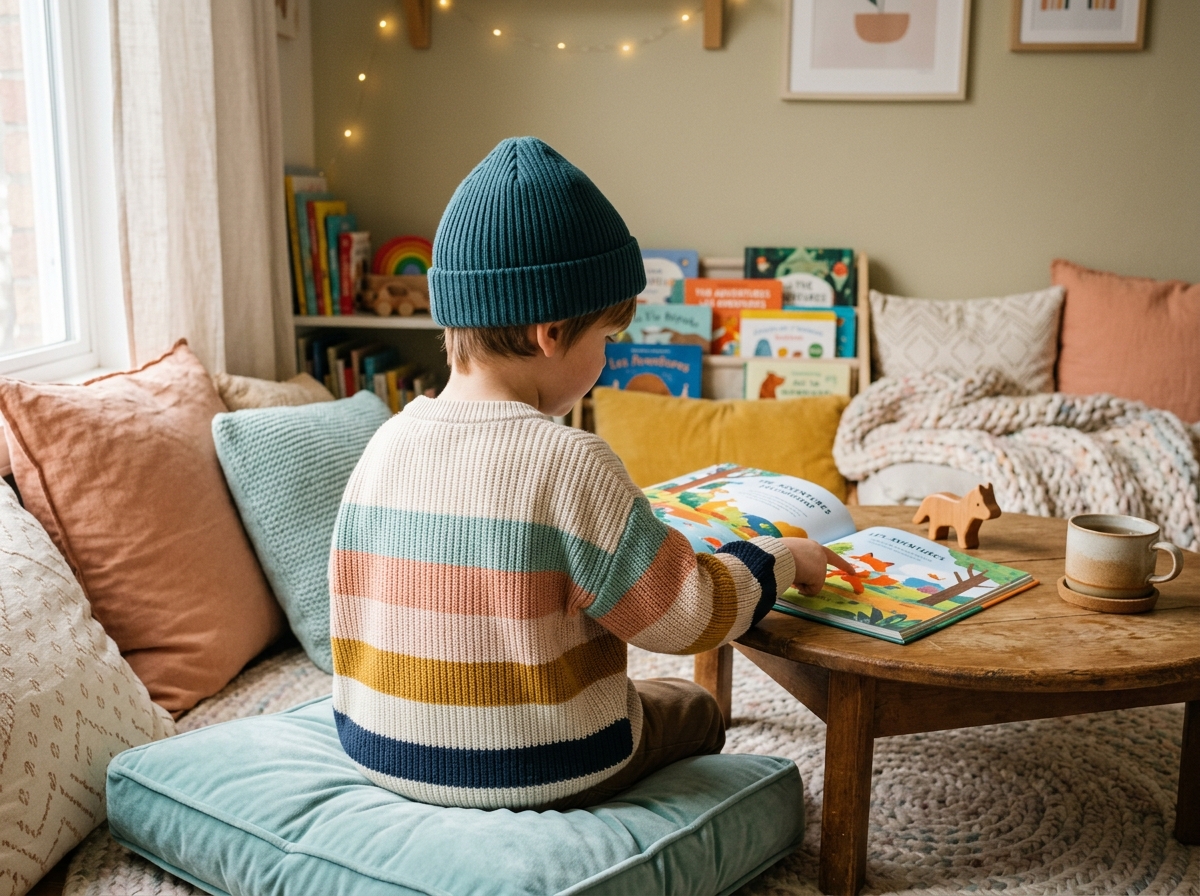
Before Zayn was born, I had a plan. He would grow up speaking two languages — mine at home, English everywhere else. It seemed simple enough. I had read the books, listened to the podcasts, talked to other bilingual parents. I felt prepared.
I was not prepared. Not because it's harder than I thought — it is — but because it's more emotional than I expected. Language is not just a tool. It's how you show your child who you are, and who they are. And when you split that across two languages, things get complicated.
Bilingualism isn't twice the words. It's twice the world — and twice the weight of getting it right.
The early months
For the first year, it didn't matter. Zayn was babbling, and the babbling was the same in both languages. I spoke to him in my mother tongue at home, English came from outside — from nursery, from the playground, from the screens we let him watch on long car rides. It felt natural.
Then at around eighteen months, something shifted. He started picking up English faster than my language, because English was everywhere — on the street, in shops, in the songs at nursery. I'd say something at home and he'd reply in English. Not because he didn't understand, but because English was the default. It was the language of the world outside our door.
The worry
I'd be lying if I said I didn't worry. Every bilingual parent I've spoken to has the same fear — that their child will understand the home language but not speak it. That it will become passive. That they'll lose it.
So I doubled down. More books in my language. More songs. Video calls with his grandmother, who speaks not a word of English. I started narrating my day out loud — "I'm cutting the apple, the apple is red" — which is charming when you have a baby and slightly unhinged when you're doing it alone in the kitchen.
The surprise
Here's what surprised me: it started working. Not in a dramatic way, but in small moments. He'd use a word from my language in the middle of an English sentence, like a key that fit a specific lock. He'd call water by its home name, never its English one. Some things, it turned out, belonged to one language and not the other.
He's not confused. He's building something — a map of which language belongs to which feeling.
What I stopped worrying about
I stopped worrying about the mixing. Every bilingual child mixes — it's not a sign of confusion, it's a sign of flexibility. I stopped worrying about the days when he only speaks English. Those days are normal. I stopped worrying that he'd fall behind — the research is clear that bilingual children catch up, and often surpass, their monolingual peers.
What I do worry about, sometimes, is whether he'll feel like he fully belongs in either world. That's a bigger question, and one I can't answer yet. All I can do is give him both languages and let him decide what to do with them.
The gift
Because it is a gift. Not because it makes him smarter or more employable — I don't care about that yet. It's a gift because it gives him access to a whole side of his family, a whole culture, a whole way of seeing the world that he wouldn't have otherwise. It's the most important thing I can pass on, and some days it's the hardest.
But then he says something in my language — something small, something I didn't teach him, something he just picked up — and I know it's worth it. Every confusing, bilingual, mixed-up moment of it.